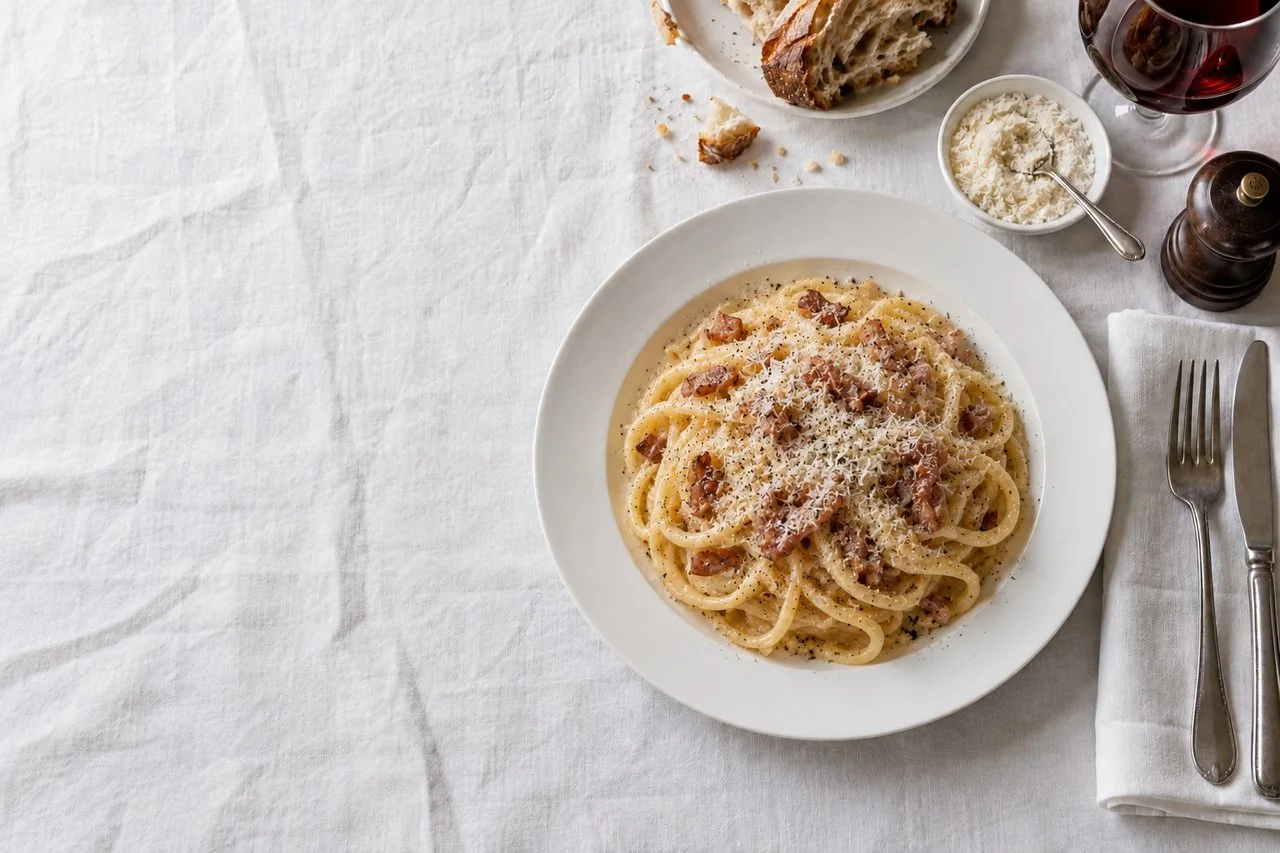
Tonnarelli alla gricia
Guanciale · pecorino · black pepper
Guanciale, pecorino and black pepper, no tomato and no egg: gricia is the least famous of Rome’s pastas and the one Romans love most. At La Lupa it comes with tonnarelli, a short walk from Termini.
Gricia is often called “white amatriciana”: the same base of guanciale and pecorino, but without tomato. According to the most common story the name comes from Grisciano, a village near Amatrice. Browned guanciale brings fat and crunch, pecorino and pasta water make the cream, black pepper finishes it.
At La Lupa gricia is made with tonnarelli, the long square-cut pasta also used for the cacio e pepe.
Gricia, cacio e pepe, carbonara and amatriciana are one family: cacio e pepe is the base, gricia adds guanciale, carbonara adds egg, amatriciana adds tomato. All four are on La Lupa’s menu: ordering two to share is the quickest way to taste the difference.
Guanciale · pecorino · black pepper
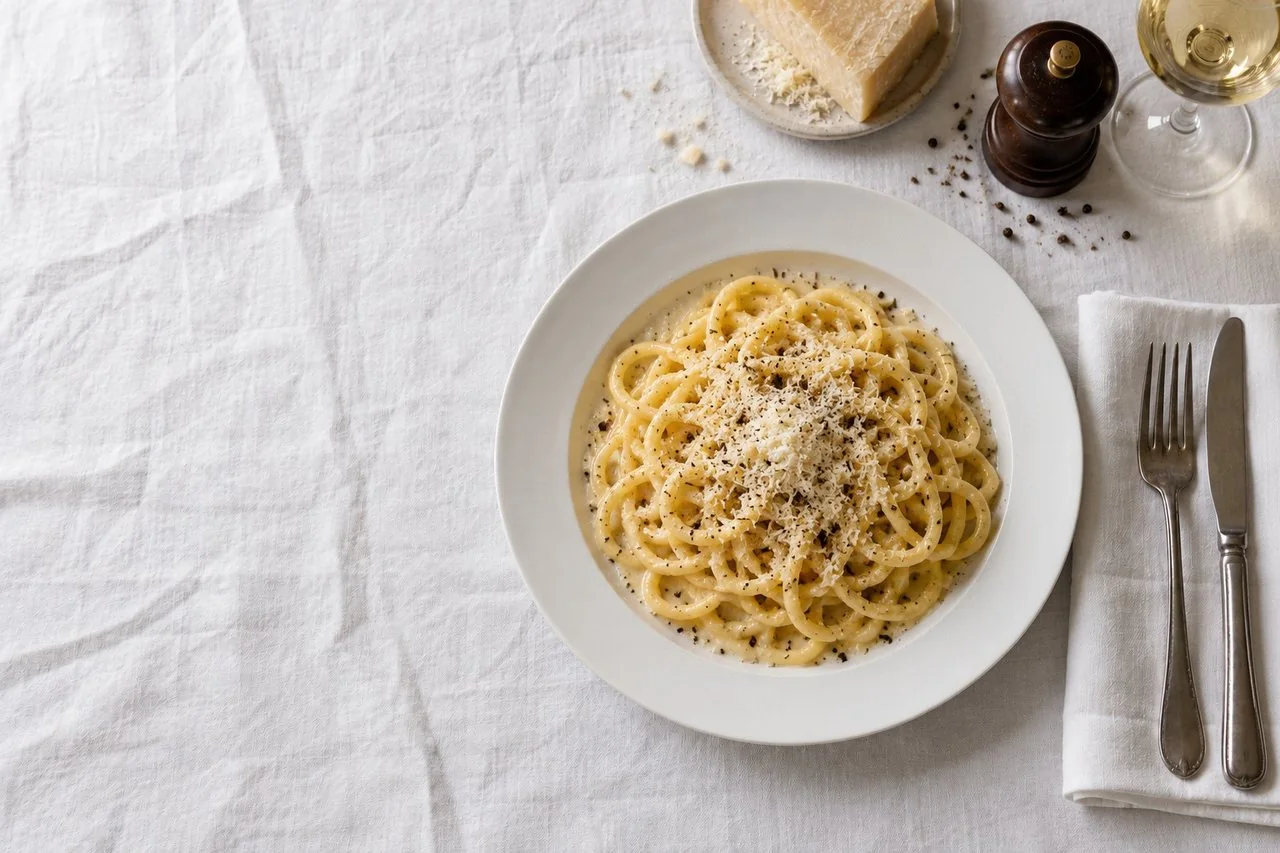
Pecorino · black pepper
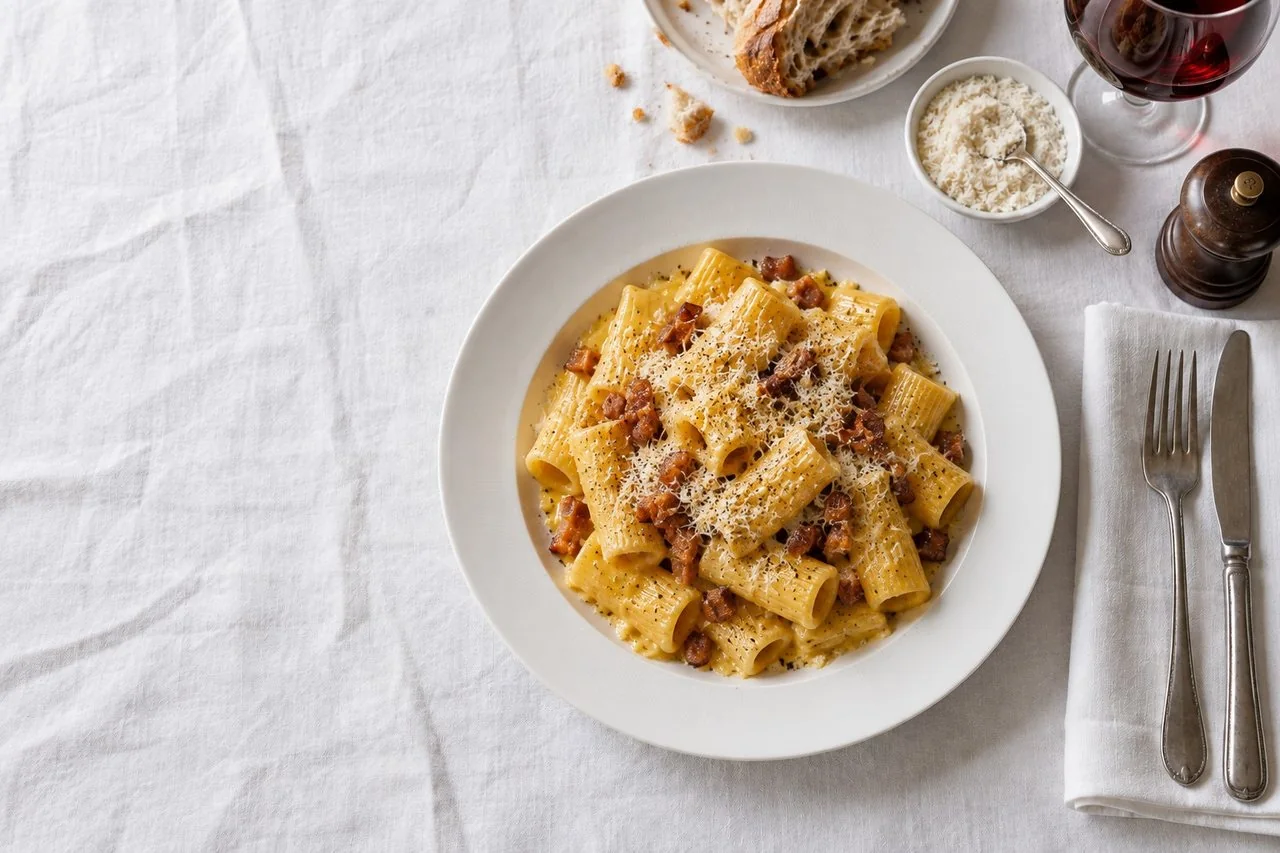
Guanciale · pecorino · egg
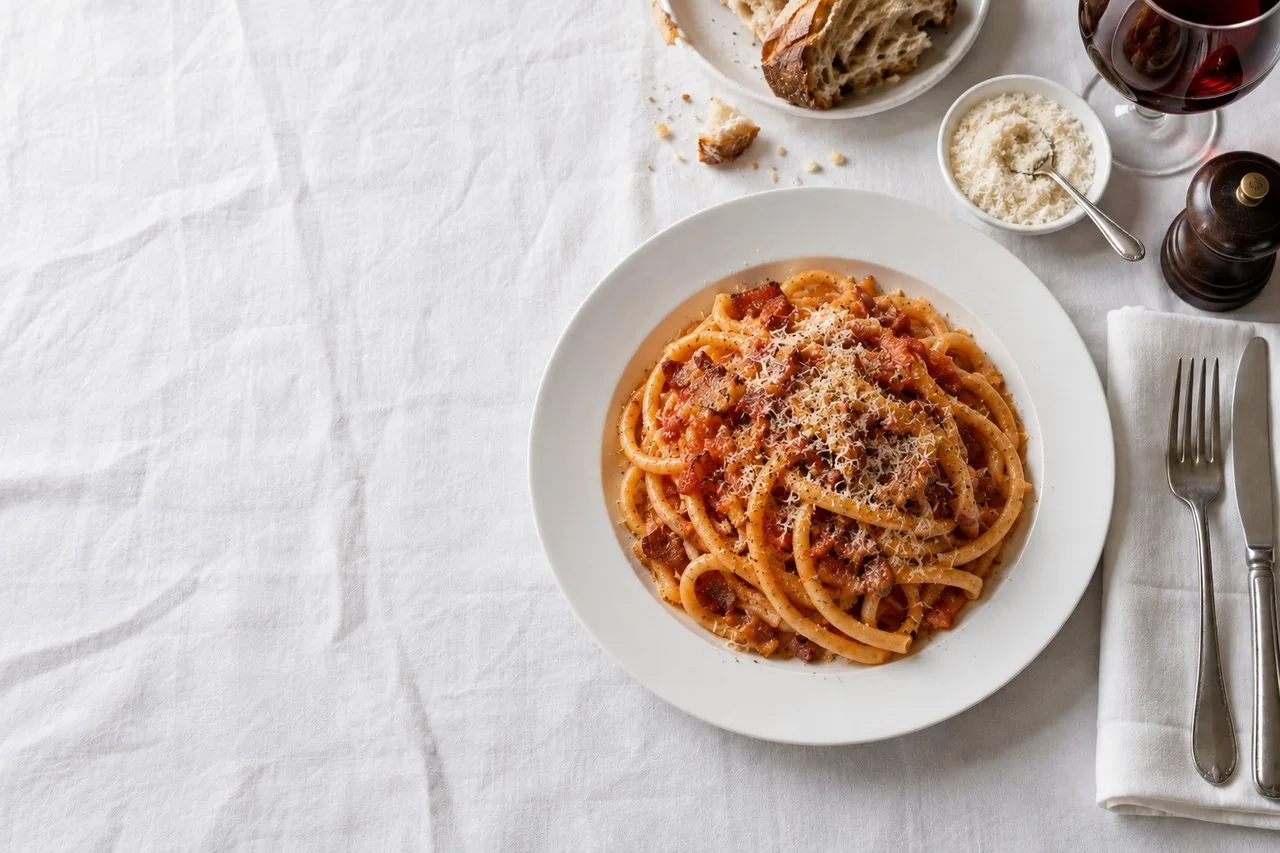
Guanciale · tomato · pecorino
On La Lupa’s menu: tonnarelli, guanciale, pecorino and black pepper.
Carbonara adds egg; gricia is just guanciale, pecorino and pepper.
No, the €30 set-menu pasta is carbonara or amatriciana; gricia is ordered à la carte.
No, it contains guanciale (cured pork cheek). Meat-free pastas include cacio e pepe and porcini fettuccine.
A table in Rome
Book a table or open the walking route from Termini.