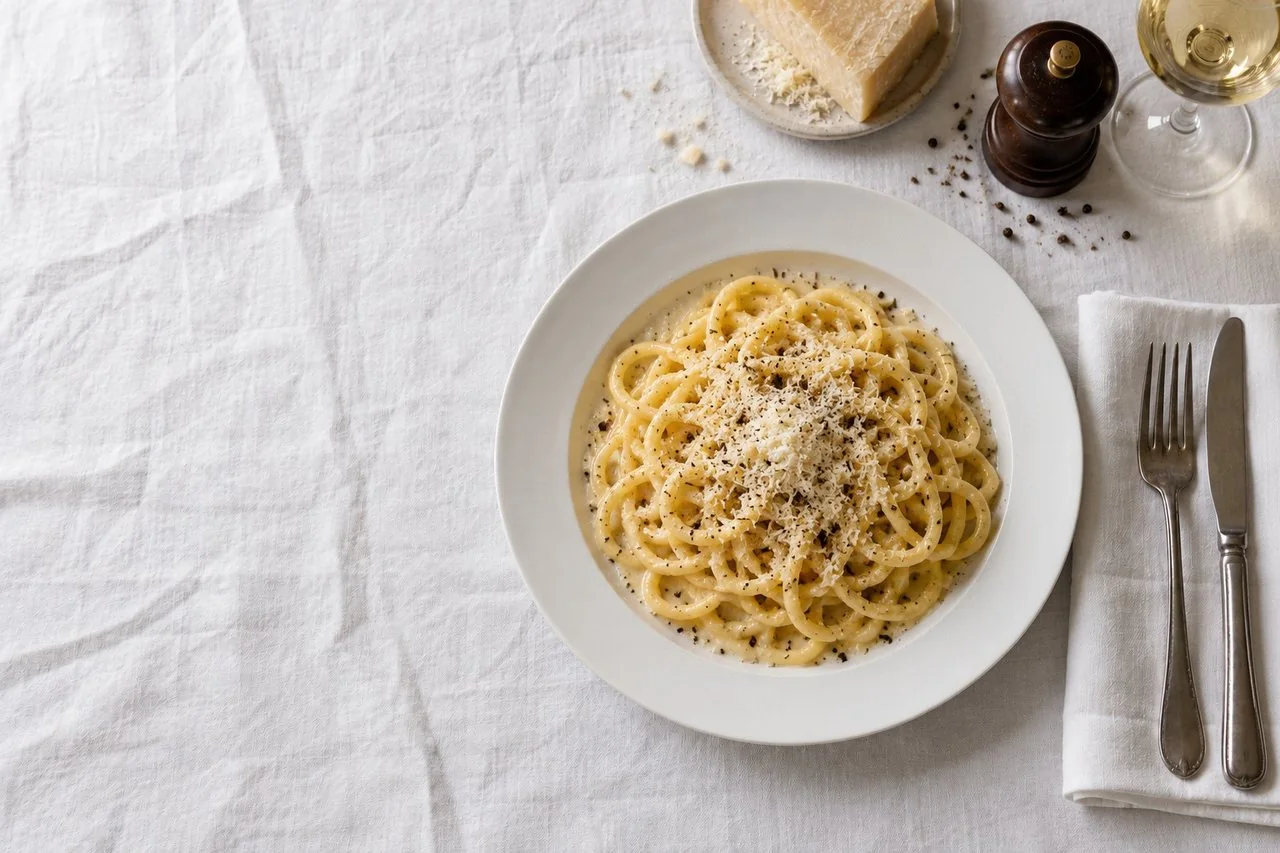
Tonnarelli cacio e pepe
Pecorino · black pepper
Four pastas, two shared ingredients and one difference each: here are all of La Lupa’s Roman pastas side by side, plus the two seafood dishes and the porcini fettuccine.
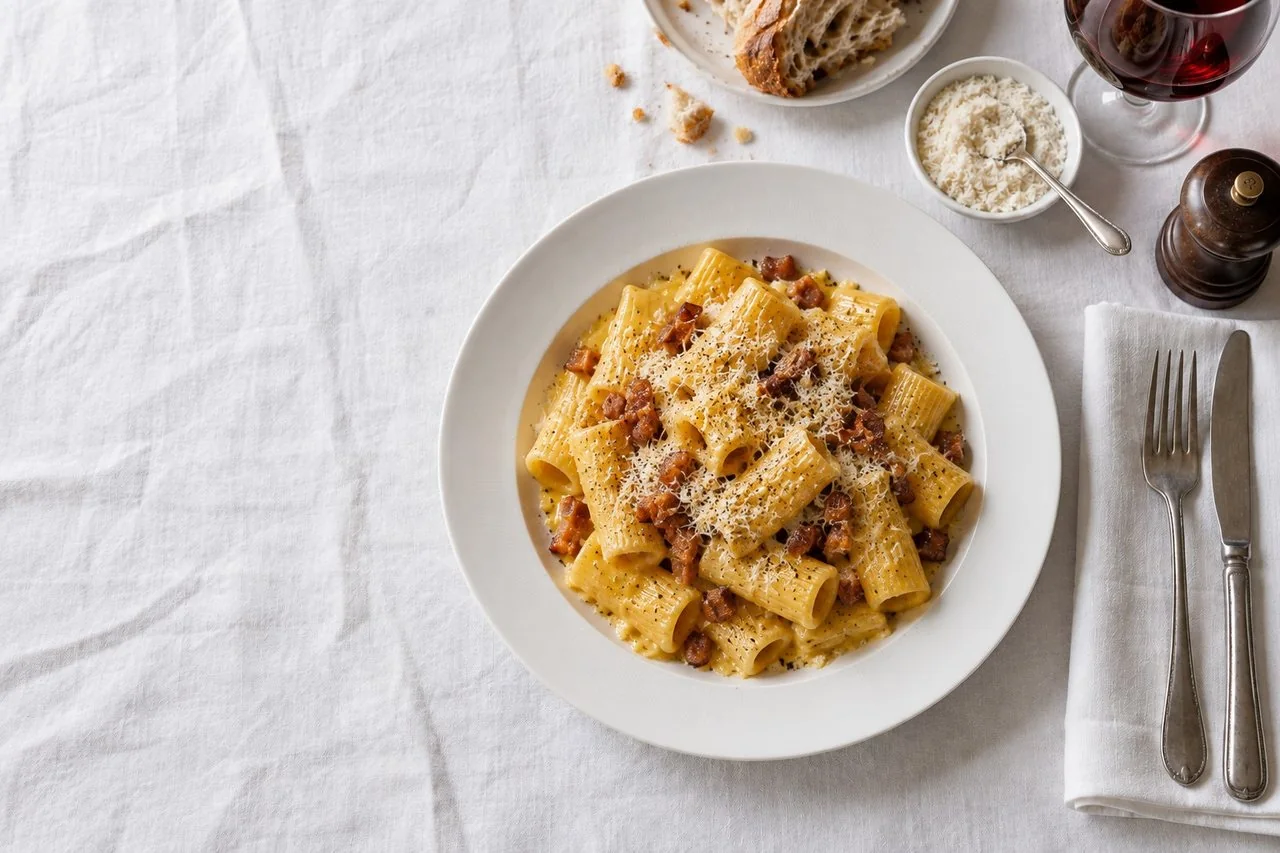
Start with cacio e pepe: pecorino and black pepper. Add guanciale and you have gricia. Add egg and you have carbonara. Swap the egg for tomato and you have amatriciana. On La Lupa’s menu each has its own pasta: tonnarelli for cacio e pepe and gricia, rigatoni for carbonara, bucatini for amatriciana.
Pecorino · black pepper
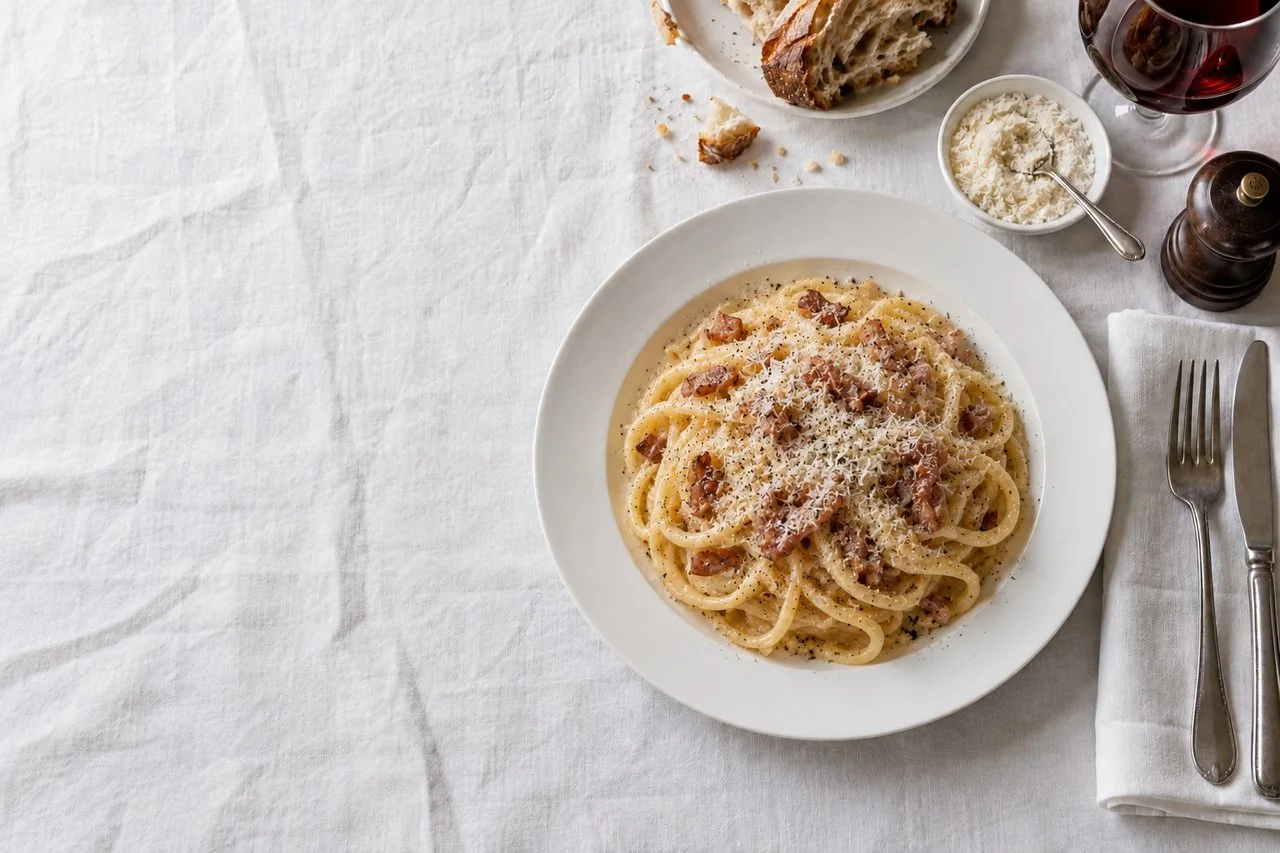
Guanciale · pecorino · black pepper
Guanciale · pecorino · egg
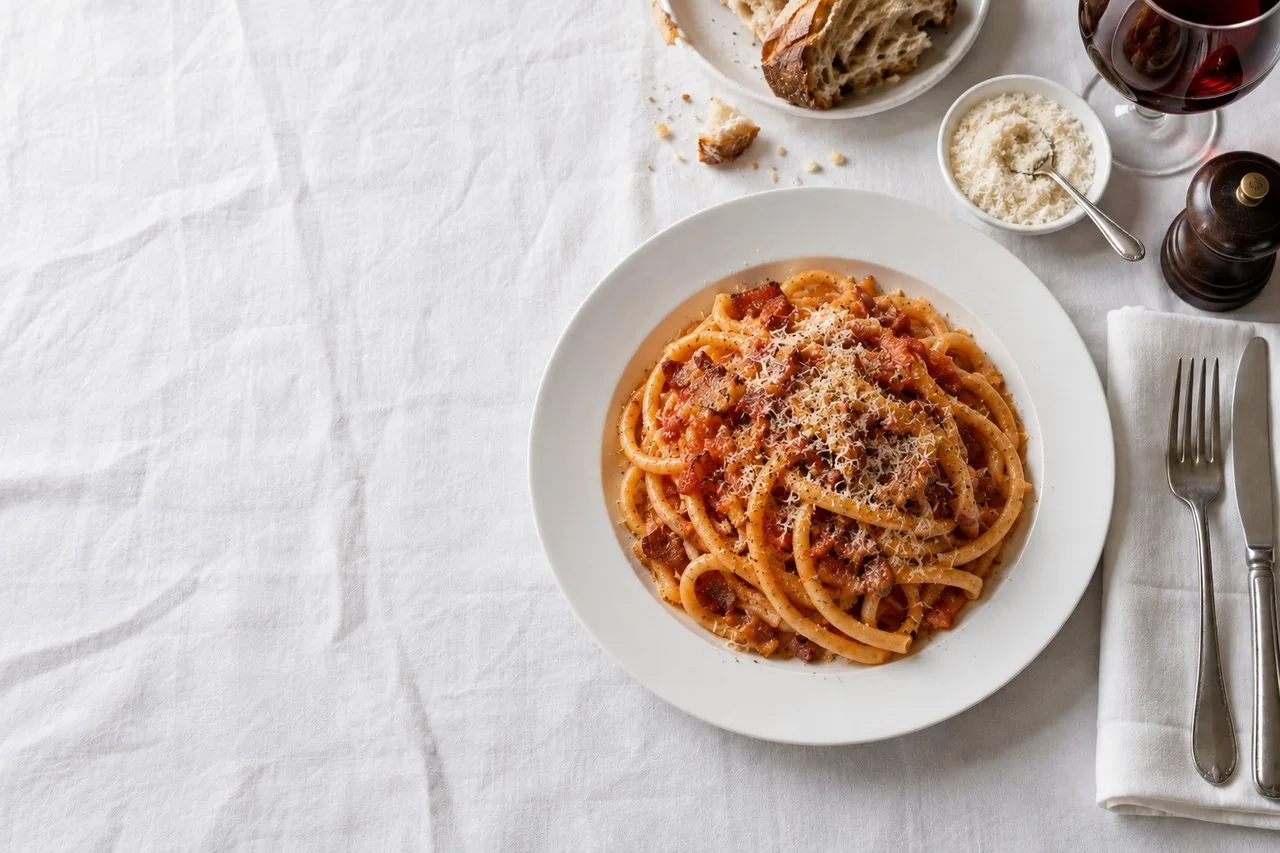
Guanciale · tomato · pecorino
Want to cook it at home? Quantities compared and a calculator on the Roman carbonara recipe.
All the Roman dishes in one table, with seasons and protected products: traditional Roman dishes.
The menu also has porcini fettuccine, made with fresh pasta, and two seafood dishes: spaghetti alle vongole and risotto alla pescatora. If there are two of you, ordering two different pastas to share is the best way to understand Roman cooking.
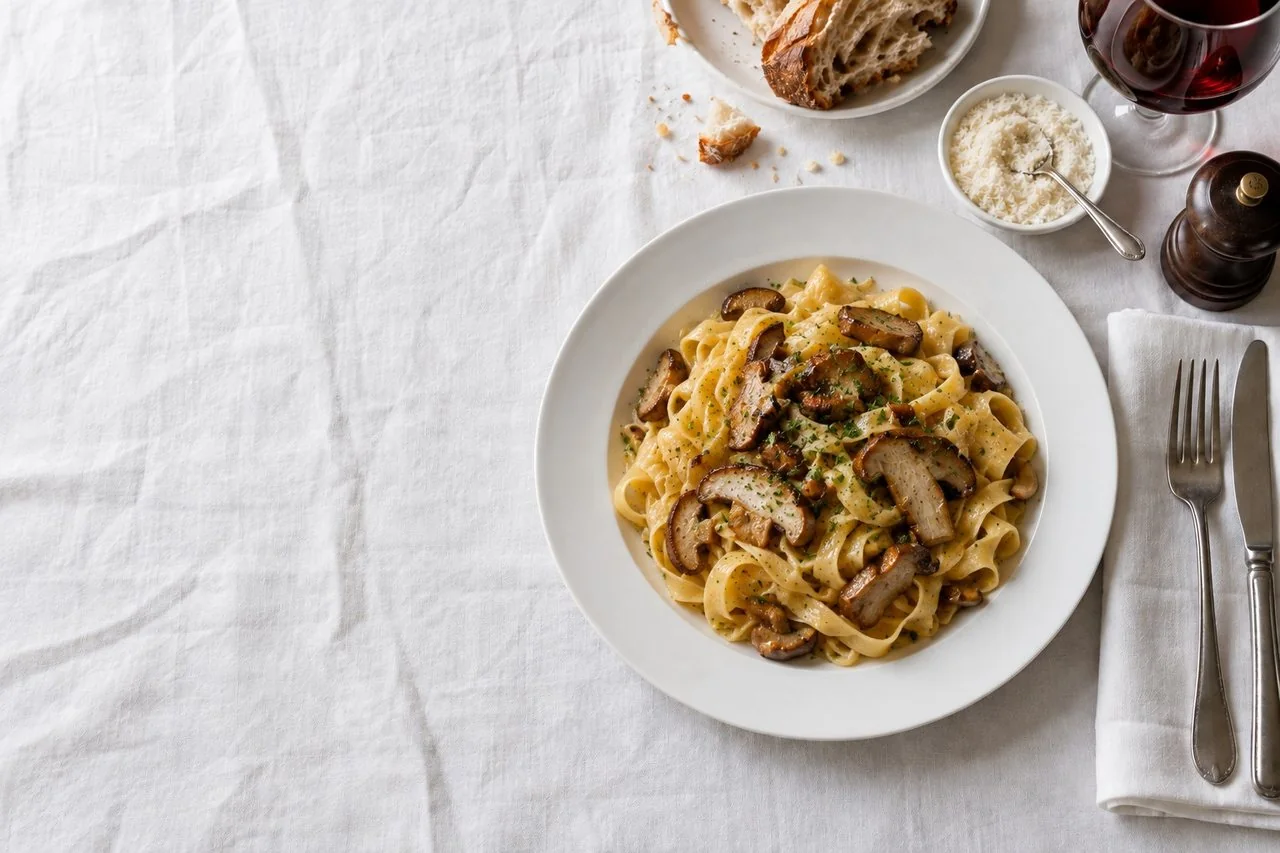
Fresh pasta
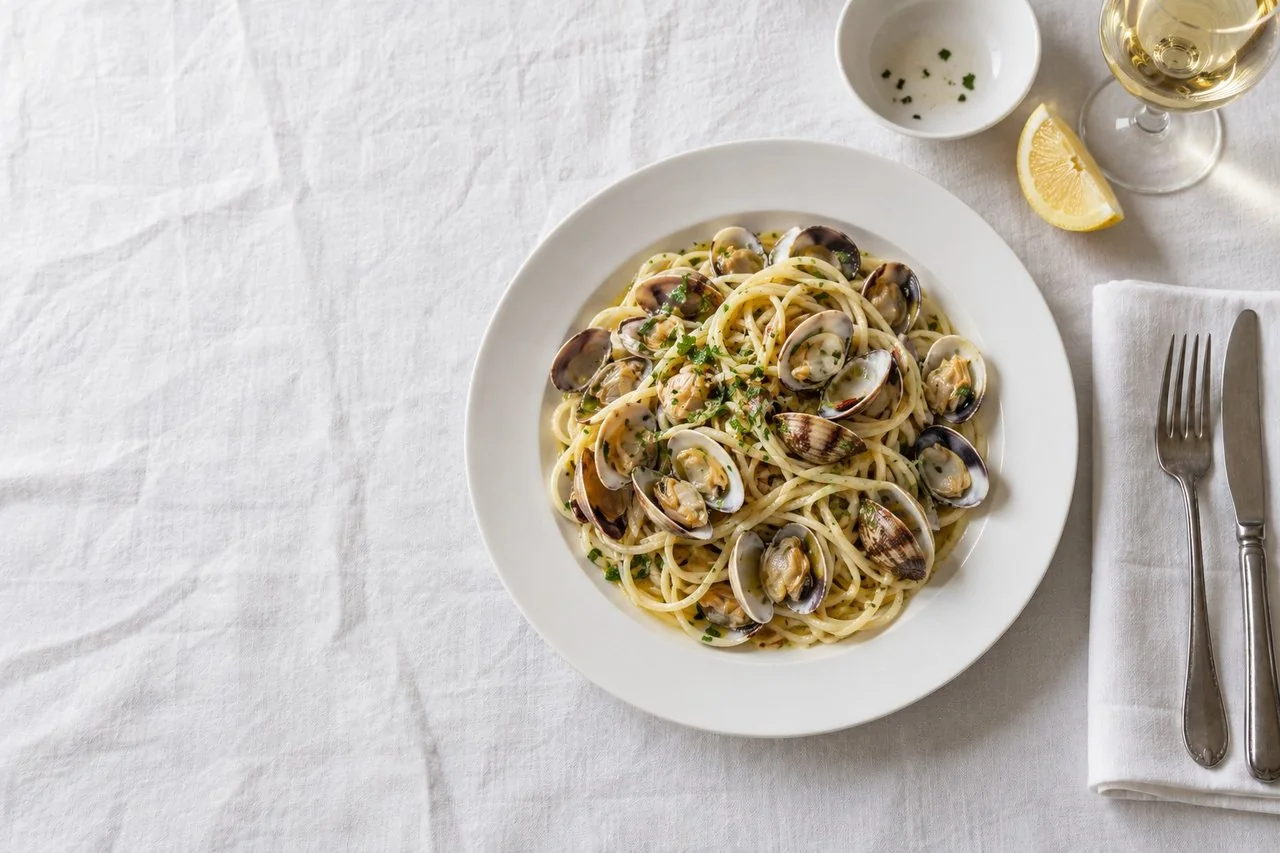
From the sea
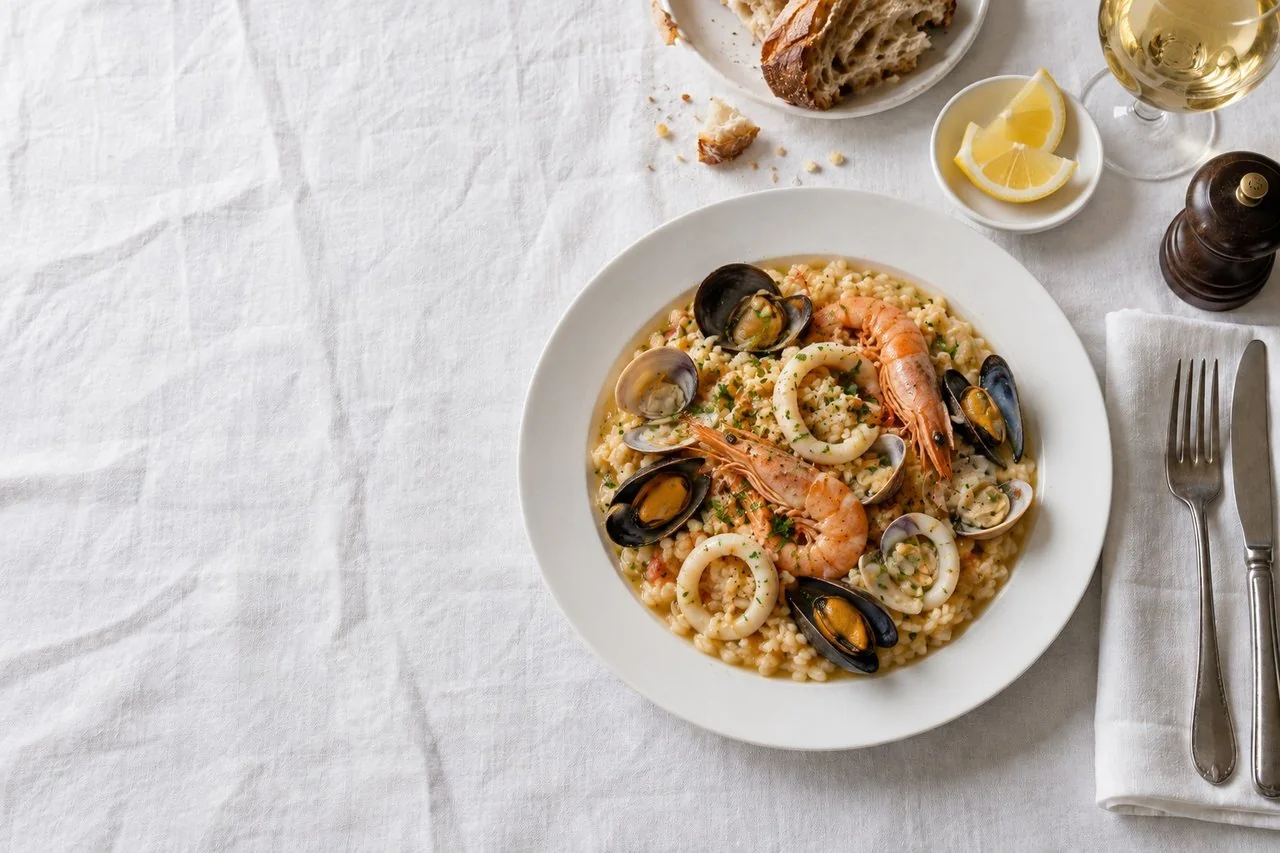
From the sea
Cacio e pepe, gricia, carbonara and amatriciana: all four are on La Lupa’s menu.
Cacio e pepe is the only one of the four without guanciale: just pecorino and black pepper.
Yes: cacio e pepe and porcini fettuccine, plus the two seafood dishes.
Carbonara or amatriciana, your choice.
A table in Rome
Book a table and order two pastas to share.